
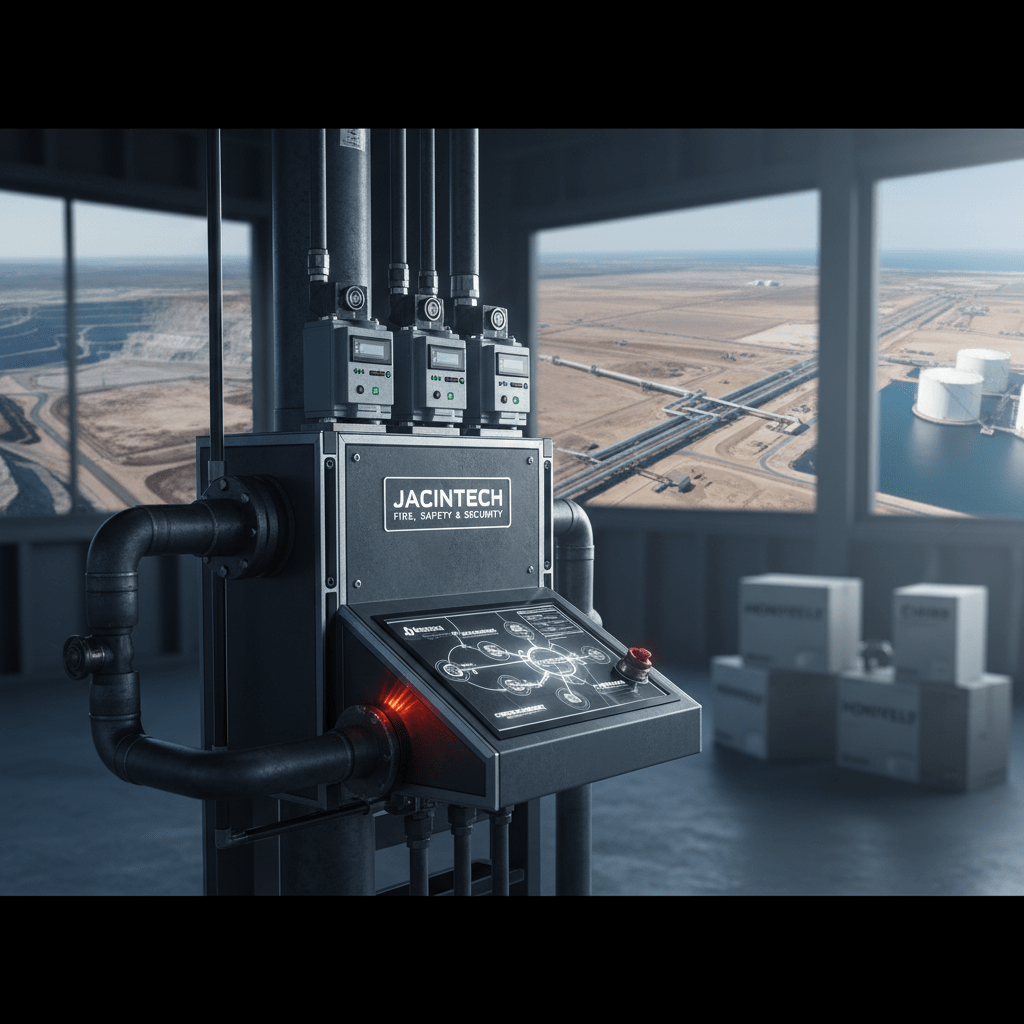
The Global Energy Sector
The architecture of continuity in the global energy sector is not merely a matter of mechanical redundancy; it is a profound commitment to the sacred preservation of dwelling within environments designed by their very nature to be entropic.


Fire is not a simple hazard.
In the bitumen-rich horizons of the Alberta Oilsands, the high-pressure franticity of the Permian Basin, and the cryogenic coast of Kitimat, fire is not a simple hazard. It is the ultimate agent of disorder, a blood-red light moving through the iron of our infrastructure, seeking a single point of failure in the pulse of production. The cold giants of our industry, the faceless bureaucracies, offer a simulacrum of safety—a collection of signs and plastic commodities that satisfy the auditor but ignore the visceral reality of the risk.
They sell a product of compliance that addresses the symptoms of danger while leaving the essence of the void untouched. At Jacintech Fire, Safety & Security, we provide a return to the clearing, an expert synthesis of the epistemology of risk with the shimmering interiority of institutional resilience. Our solution package is not a generic bid; it is a technical and philosophical covenant, architected to withstand the specific elemental threats of each high-value sector.
To bridge the chasm between static regulations and the volatile reality of the field, we offer a Beyond-Baseline Fire Protection Assessment that serves as a forensic mapping of your facility’s unique vulnerability. We move beyond the superficiality of checklists to contrast your existing infrastructure against the rigorous demands of NFPA 11, 13, and 15, the pulse-integrity of NFPA 20 and 24 fire water networks, and the refined process-safety benchmarks of API RP 2001.
We ensure that every Victaulic deluge valve, Det-Tronics flame detector, and Viking suppression system is not merely present, but functionally aligned with the Canada Oil and Gas Installations Regulations and the clean-agent precision of NFPA 2001. Whether transitioning to fluorine-free SFFF concentrates or hardening control rooms with Novec 1230 systems, our assessment ensures your hardware is forged for the environment it inhabits.
This diagnostic culminates in a strategic Roadmap—a living document that integrates engineered retrofits, precise verifications, and a 52-week preventive maintenance cycle into the very DNA of your operations. By grounding our technical expertise in the specific environmental extremes of your assets—from the cryogenic seal of an LNG terminal to the high-heat volatility of a bitumen upgrader—we ensure that your fire protection systems are not just a line item for an inspector, but a robust barrier against the entropy that threatens the continuity of your production.
A Profound Commitment.
The architecture of continuity in the global energy sector is not merely a matter of mechanical redundancy; it is a profound commitment to the sacred preservation of dwelling within environments designed by their very nature to be entropic. As we look across the three primary theaters of our operation—the bitumen-rich horizons of the Alberta Oilsands, the high-pressure franticity of the Permian Basin, and the cryogenic coast of Kitimat—we recognize that fire is not a simple hazard.
It is the ultimate agent of disorder, a blood-red light moving through the iron of our infrastructure, seeking a single point of failure in the pulse of production. The cold giants of our industry, the faceless bureaucracies, offer a simulacrum of safety—a collection of signs and plastic commodities that satisfy the auditor but ignore the visceral reality of the risk. They sell a product of compliance that addresses the symptoms of danger while leaving the essence of the void untouched.
At Jacintech Fire, Safety & Security, we provide a return to the clearing, an expert synthesis of the epistemology of risk with the shimmering interiority of institutional resilience. Our solution package is not a generic bid; it is a technical and philosophical covenant, architected to withstand the specific elemental threats of each high-value sector. To bridge the chasm between static regulations and the volatile reality of the field, we offer a Beyond-Baseline Fire Protection Solution—a forensic mapping of your facility’s unique vulnerability.
We move beyond the superficiality of checklists to contrast your existing infrastructure against the rigorous demands of NFPA 11, 13, and 15, the pulse-integrity of NFPA 20 and 24 fire water networks, and the refined process-safety benchmarks of API RP 2001 and API RP 500/505 hazardous area classifications.
We ensure that every Victaulic deluge valve, Det-Tronics UV/IR flame detector, and Viking suppression system is not merely present, but functionally aligned with the Canada Oil and Gas Installations Regulations and the Pipeline Safety Act. Whether navigating the transition to fluorine-free SFFF concentrates or hardening control rooms with Novec 1230 and Kidde CO2 systems under NFPA 2001, our Solutions Suite ensures your hardware is forged for the environment it inhabits.
This diagnostic culminates in a strategic Roadmap—a living document that integrates engineered retrofits, NFPA 25 compliant verifications, and a 52-week preventive maintenance cycle into the very DNA of your operations.
By grounding our technical expertise in the specific environmental extremes of your assets—from the cryogenic seal of an LNG terminal to the high-heat volatility of a bitumen upgrader—we ensure that your fire protection systems are not just a line item for an inspector, but a robust barrier against the entropy that threatens the continuity of your production.
The Architecture of Continuity
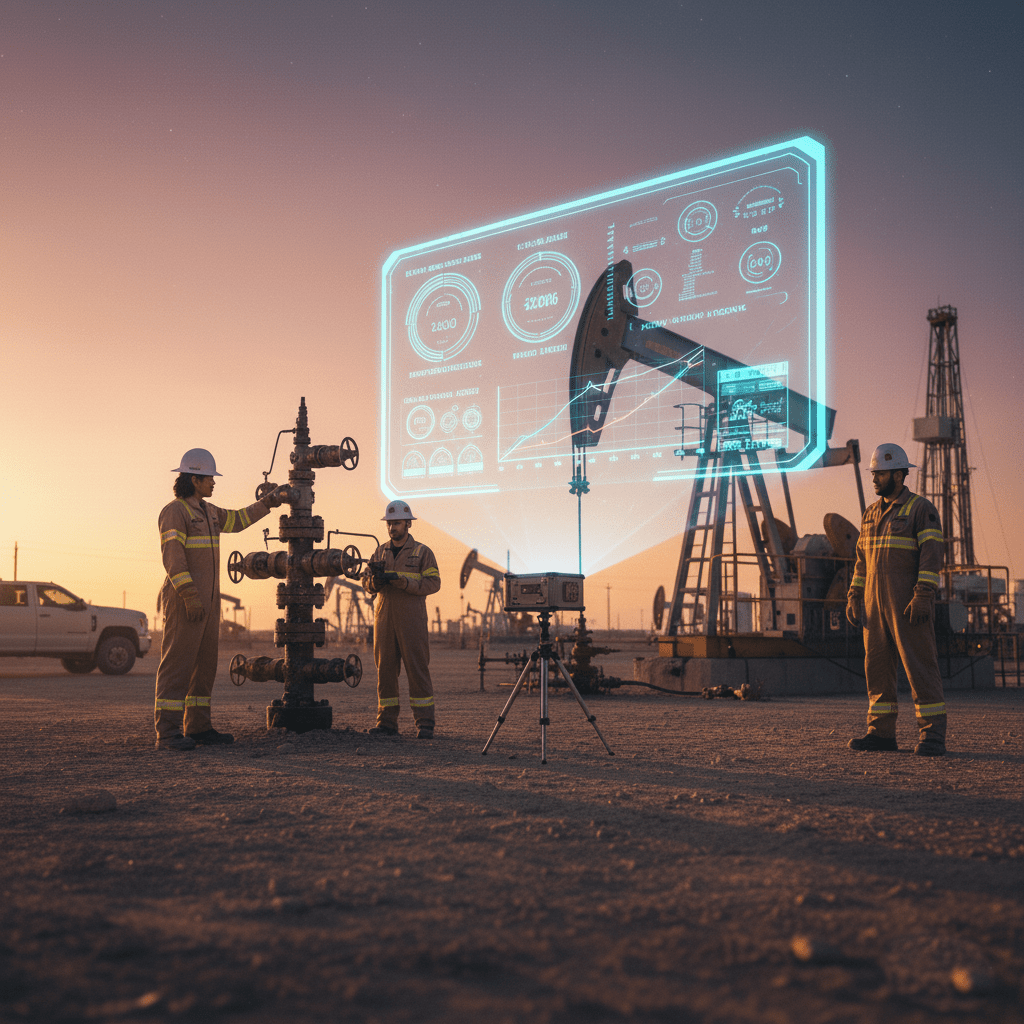


The Challenge of Remote Resilience.
In the Alberta Oilsands, we operate within the shadow of a great legislative leviathan, the Safety Codes Act, which gives force to the National Fire Code – 2023 Alberta Edition. Here, the challenge is one of remote resilience, where the vast scale of production is constantly threatened by the slow violence of the external wilderness.
We have designed an integration strategy that bridges the internal life safety systems of the plant with the site-wide wildfire mitigation principles of FireSmart. We recognize that in these remote cathedrals of bitumen, the Alberta Energy Regulator’s Directive 055 sets a rigorous standard for the storage of flammable and combustible liquids that goes beyond the standard commercial mandate.
We adhere obsessively to NFPA 30, ensuring that the heavy industrial foam systems required by NFPA 11 are not just present, but are verified through the shimmering precision of the Canadian Electrical Code, CSA C22.1. We understand that your facility is a target for entropy, and our integration of CAN/ULC-S1001 ensures that when the power grid fails, your sanctuary remains operational—a somatic marker of absolute structural integrity in a landscape of uncertainty.
RUGGEDIZED, VIBRATION-RESISTANT SUPPRESSION
Across the border in the Permian Basin of Texas and New Mexico, the risk profile shifts from the remote wilderness to the high-pressure sublime. Here, the hazard is one of mechanical intensity, where fracking pumps and blenders operate under a vibration-shaken state of liquid modernity. In this environment, the International Building and Fire Codes serve as the baseline, but the true master of the site is the National Electrical Code, NFPA 70, and the rigorous standards for Water Spray Fixed Systems under NFPA 15.
We have identified a critical market need for ruggedized, vibration-resistant suppression that can survive the abrasive, fine-grained dust of the desert. We do not merely install hardware; we hallow the machinery of your protection, utilizing Det-Tronics acoustic leak detection and Viking flame sensors that can distinguish the whistle of a failing hydraulic line from the background roar of production, ensuring that your Class I, Division 1 hazardous locations remain fortified against the entropic reach of an ignition event.
We address the loss aversion inherent in high-stakes energy production by aligning our pricing strategy with the weighted probability of your survival, ensuring that the Whiteness of the Whale—that unpredictable moment of mechanical failure—is met with a pre-engineered, metaphysical shield of dry and wet chemical agents governed by NFPA 17 and 17A. Our Beyond-Baseline Fire Protection Suite of Solutions for the Permian identifies the gap between generic off-the-shelf extinguishers and the specialized requirements of high-pressure wellpads, where Victaulic vortex systems and Kidde dry chemical skids provide the necessary density of suppression.
This diagnostic culminates in a Customized Solutions Roadmap that integrates NFPA 25 ITM protocols into your 52-week operational cycle, transforming your life safety infrastructure from a passive cost center into an active guardian of your uptime. By grounding our technical expertise in the mechanical franticity of the basin, we ensure your fire protection is not just a secondary thought, but a fundamental component of your facility’s structural and operational integrity.


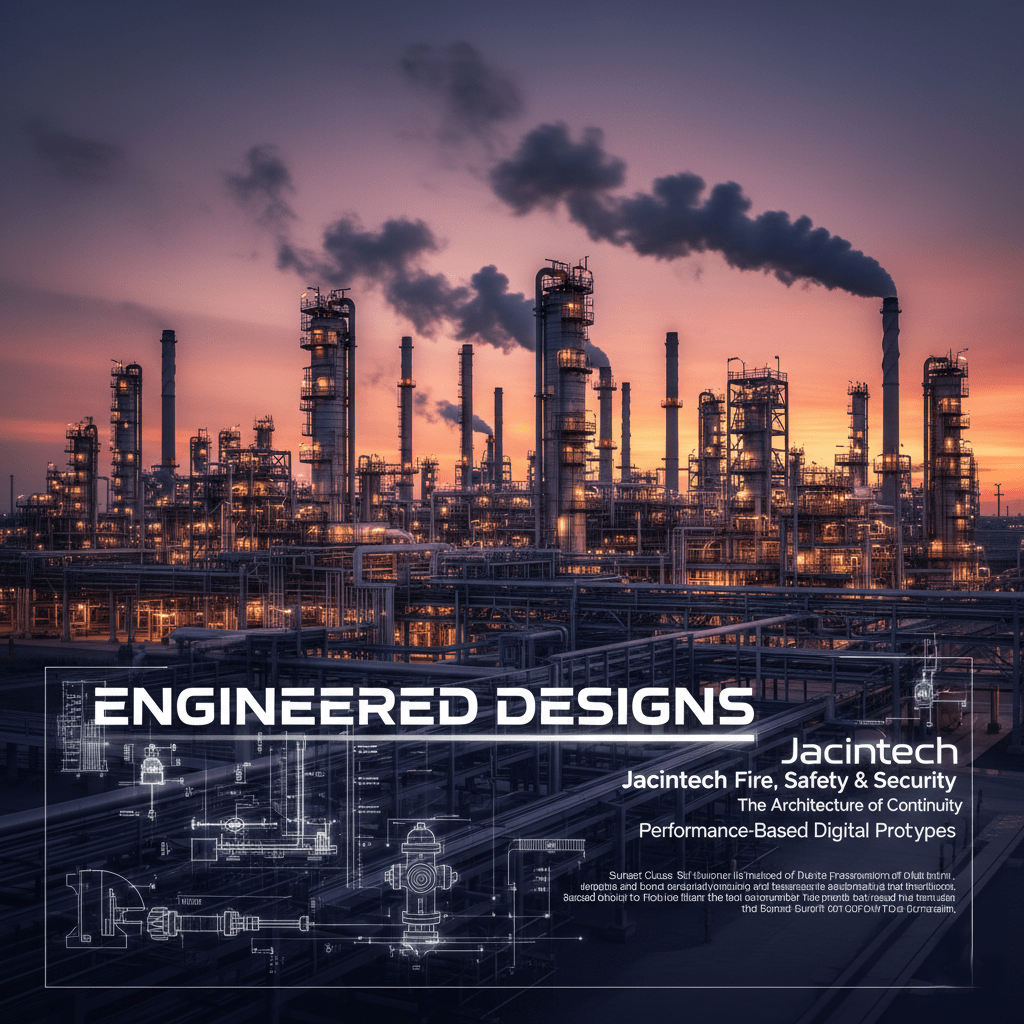



Specialized Passive Fire Protection.
In the cryogenic silence of the Kitimat export terminals, we encounter a multi-hazard landscape where the stillness of liquified natural gas meets the seismic volatility of the British Columbia coast.
An LNG spill is an entropic event that does not merely burn; it freezes, triggering the immediate embrittlement and catastrophic failure of the structural steel that houses your enterprise.
To protect this dwelling, our solution architecture navigates the complex interplay between the British Columbia Fire Code, the CSA Z276 standard for LNG production, and the global mandates of NFPA 59A.
We provide specialized Passive Fire Protection (PFP) systems—utilizing high-performance materials like FOAMGLAS® Cryo Spill™ and Intumescent Coatings—engineered to withstand the 1,100°C furnace of a pool fire while simultaneously insulating against the -162°C thermal shock of a cryogenic leak.
Our technical covenant ensures that the “pilgrimage of safety” for your infrastructure is never interrupted by the tectonic or the entropic.
We deploy Victaulic seismic-rated firewater networks and Det-Tronics X3301 multispectrum detectors, designed to remain operational even as the earth beneath the terminal shifts.
For your high-value control modules, we integrate the technical sublimity of Novec 1230 and Stat-X aerosol suppression, providing a clean-agent shield that protects sensitive electronics without the risk of water damage.
This suite of services—from high-expansion PHOS-CHEK foam systems for vapor suppression to NFPA 25 compliant maintenance—is not a collection of parts, but a unified barrier built to preserve the continuity of your production against the most extreme elemental threats on the coast.
The Sanctum of The Control Room
The sanctum of the control room requires a specialized form of vigilance governed by NFPA 2001, the standard for clean agent fire extinguishing systems. In remote environments where water damage equals the total dissolution of your operational history, we deploy the “green” choice of FK-5-1-12, often known as Novec 1230, which possesses a zero ozone-depletion potential and a short atmospheric lifetime, or the reliable hydrofluorocarbon HFC-227ea.
These gaseous shields are not merely installed; they are ritualistically verified through room integrity testing. We perform the door fan test with a monomaniacal focus, ensuring the enclosure is airtight enough to maintain the required concentration for at least ten minutes—the hold time necessary to prevent the reignition of the flame.
We pair these systems with high-sensitivity smoke detection, such as the aspirating VESDA systems mandated by NFPA 72, which function as the shimmering interiority of your facility’s consciousness, detecting a thermal event before it manifests as a fire. We include pressure relief venting to prevent structural damage during the rapid discharge of the agent, ensuring that the cure is never as destructive as the disease.
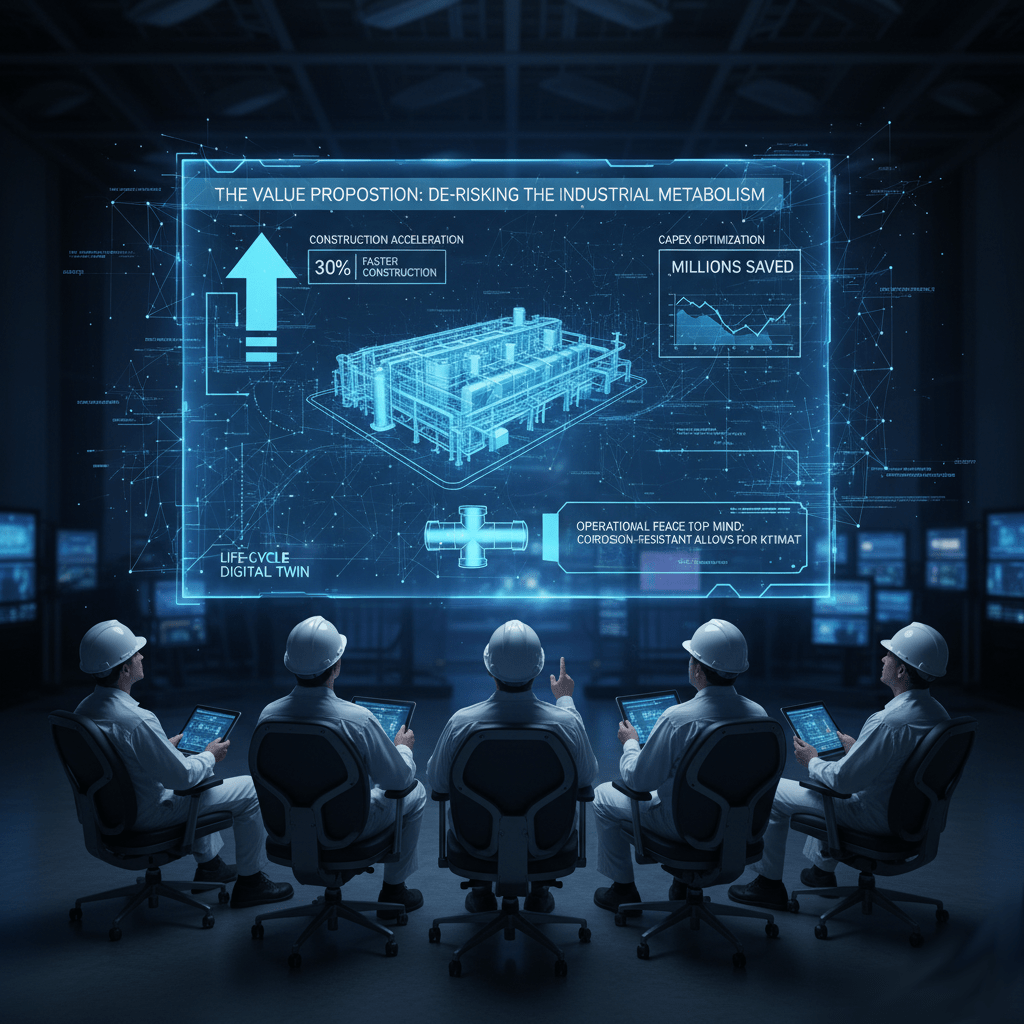
Bridging The Profound Information Asymmetry
Finally, we must address the definitive transformation of the regulatory landscape in Alberta. It is now March 1, 2026, and the horizon we once warned of has been crossed. On December 31, 2025, the Sunset Clause for fire alarm technician certifications officially descended.
Legacy qualifications from NAIT, SAIT, or the AFSA have been rendered legally non-existent under the National Fire Code – Alberta Edition. To continue to trust your facility to those who did not transition is to succumb to the status quo bias—an irrational belief that because the alarm panel is silent today, your building is safe for tomorrow. Jacintech Fire, Safety & Security bridges this profound information asymmetry by deploying only sentinels who have achieved the mandatory CFAA and ECAA PIN certifications.
We offer Fire Safety Digital Services, using cloud-connected panels to provide real-time health monitoring of your remote systems, a direct response to the entropy of legacy providers. We do not sell you a contract; we offer you a declaration of continuity, ensuring that through our holistic risk integration and professional engineering oversight, the sacred order of your industrial metabolism is never overtaken by the void. Choose Jacintech, and let us together architect the sanctum of your survival.